OUT-OF-PLANE PROOF TESTING OF MASONRY INFILL WALLS
OUT-OF-PLANE PROOF TESTING OF MASONRY INFILL WALLS
Structures (2018), 15, 244-258
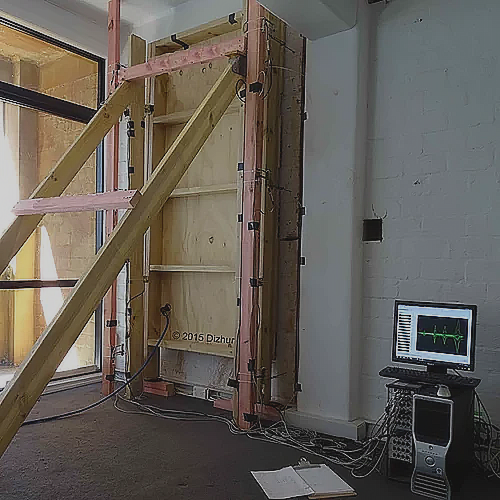
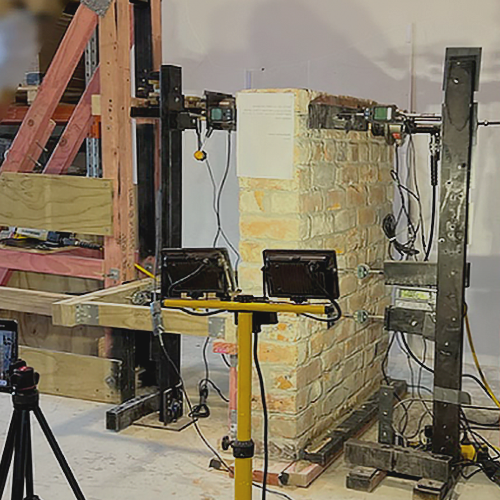
Two-way out-of-plane flexure, boundary restraints, and presumed ‘arching’ action from the building frame substantially improved the out-of-plane capacity of infill walls compared to one-way vertical out-of-plane flexure. The effect of simulated in-plane pre-damage on the out-of-plane capacity was also investigated.
Read More
SHAKE-TABLE INVESTIGATION OF A TIMBER RETROFIT SOLUTION FOR UNREINFORCED MASONRY CAVITY-WALL BUILDINGS
SHAKE-TABLE INVESTIGATION OF A TIMBER RETROFIT SOLUTION FOR UNREINFORCED MASONRY CAVITY-WALL BUILDINGS
Associazione Nazionale Italiana di Ingegneria Sismica, ANIDIS Conference (2019) - Ascoli Piceno, Italy
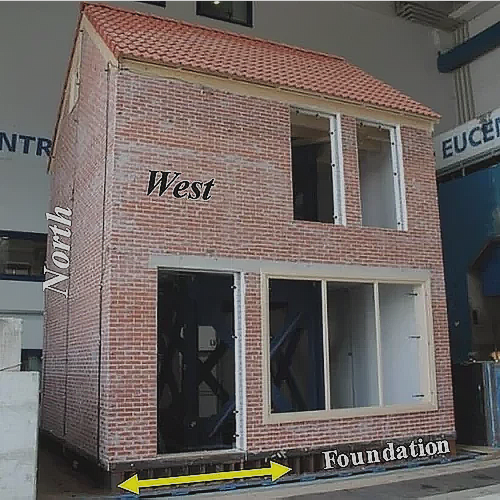
Shake-table testing of two cavity-wall masonry full-scale building prototypes, one in as-built conditions and one retrofitted with timber strong-backs.
Read More
TESTING OF URM WALL-TO-DIAPHRAGM THROUGH-BOLT PLATE ANCHOR CONNECTION
TESTING OF URM WALL-TO-DIAPHRAGM THROUGH-BOLT PLATE ANCHOR CONNECTION
Earthquake Spectra (2021), 37(1), 304-323
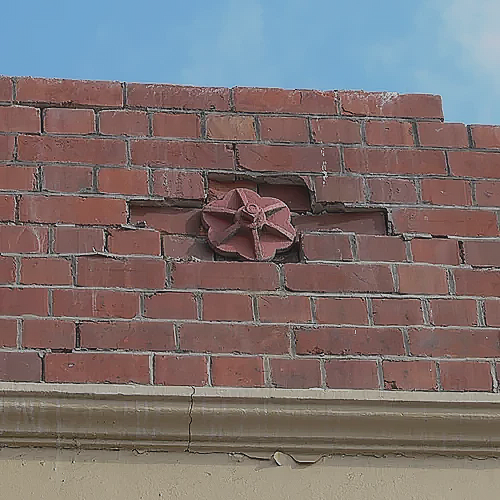
Six existing vintage plate anchor connections were tested in a historic URM building, and 12 newly installed plate anchors were tested in two additional URM buildings. Test results are provided together with equations for the prediction of plate anchor capacity.
Read More
ON-SITE TESTING OF MASONRY SHEAR WALLS STRENGTHENED WITH TIMBER PANELS
ON-SITE TESTING OF MASONRY SHEAR WALLS STRENGTHENED WITH TIMBER PANELS
Proceedings of the Institution of Civil Engineers – Structures and Buildings (2020)
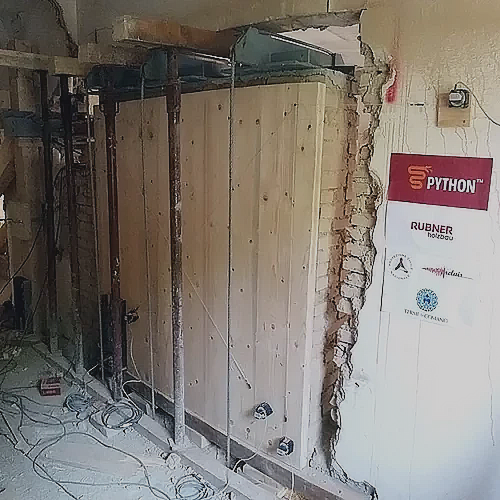
The use of timber-based panels connected to the masonry walls via mechanical fasteners was investigated to strengthen or repair unreinforced masonry (URM). Testing consisted of in-plane semi-cyclic quasi-static loading applied to as-built, repaired and retrofitted configurations.
Read More
MECHANICAL ANCHOR SUPPLEMENTARY SHEAR REINFORCING AS A RETROFIT TECHNIQUE FOR HOLLOWCORE FLOORS
MECHANICAL ANCHOR SUPPLEMENTARY SHEAR REINFORCING AS A RETROFIT TECHNIQUE FOR HOLLOWCORE FLOORS
New Zealand Society for Earthquake Engineering Conference (2022)
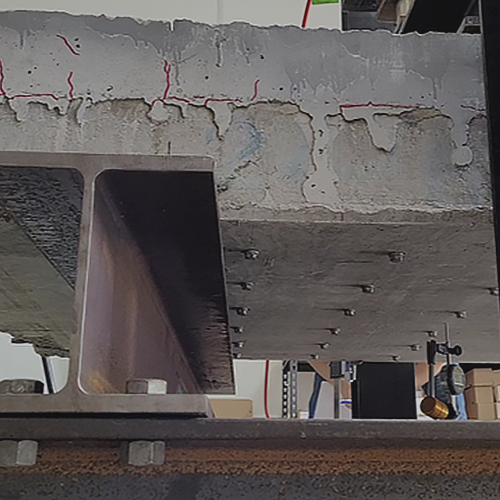
Two full-scale, three-point bending shear tests and FEA analysis were conducted to assess the impact on hollowcore floor unit (aka dycore) shear performance of post-installed PYTHON HC supplementary shear reinforcement.
Read More
CONSTRUCTION DETAILS AND OBSERVED EARTHQUAKE PERFORMANCE OF UNREINFORCED CLAY BRICK MASONRY CAVITY-WALLS
CONSTRUCTION DETAILS AND OBSERVED EARTHQUAKE PERFORMANCE OF UNREINFORCED CLAY BRICK MASONRY CAVITY-WALLS
Structures (2016), 6, 159–169
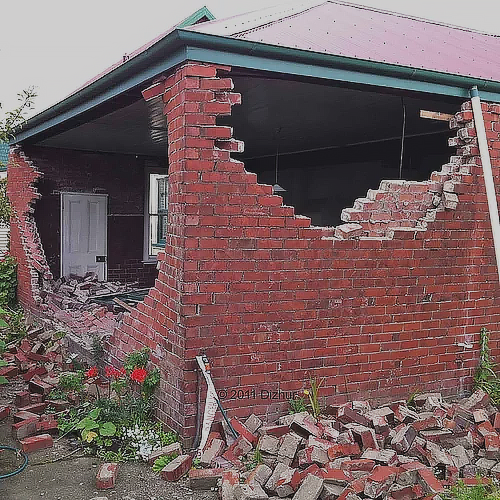
Two hundred and fifty-two cavity-walls damaged during the 2010/2011 Canterbury earthquakes were assessed to define the most commonly encountered construction details and identify typical deficiencies in earthquake response to address with appropriate retrofit solutions.
Read More
IN-SITU TESTING OF A POST-TENSIONED SEISMICALLY RETROFITTED FULL-SCALE URM CHIMNEY
IN-SITU TESTING OF A POST-TENSIONED SEISMICALLY RETROFITTED FULL-SCALE URM CHIMNEY
New Zealand Society for Earthquake Engineering Conference (2017)
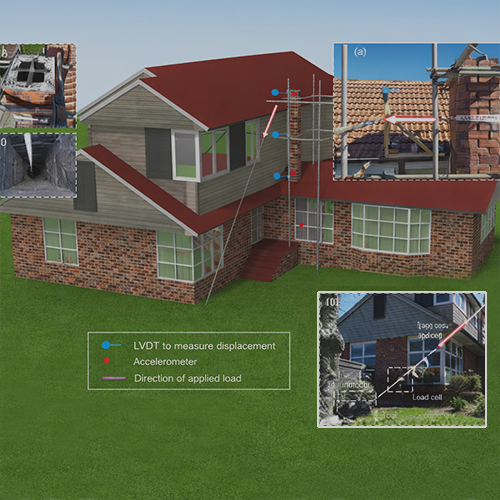
Unreinforced masonry (URM) chimneys are among the most damage-prone nonstructural elements in earthquakes, with past events consistently producing collapse, insurance losses, and life-safety hazards.
Read More
EFFECTIVE SEISMIC RETROFIT OF URM PARAPETS USING ANCHORS AS VERTICAL REINFORCEMENT
EFFECTIVE SEISMIC RETROFIT OF URM PARAPETS USING ANCHORS AS VERTICAL REINFORCEMENT
Earthquake Spectra (2026), 42 (2)
Seismic retrofit of unreinforced masonry (URM) parapets can provide enhanced seismic performance and collapse prevention. While widely adopted retrofit methods (e.g., braced systems) have been shown to be effective, they often require trade-offs in the form of high installation and fabrication costs, risk of water ingress due to roof penetrations, and disturbance of historical aesthetic.
Read More