
EFFECTIVE SEISMIC RETROFIT OF URM PARAPETS USING ANCHORS AS VERTICAL REINFORCEMENT
EARTHQUAKE SPECTRA (2026), 42(2)
Scope and methodology
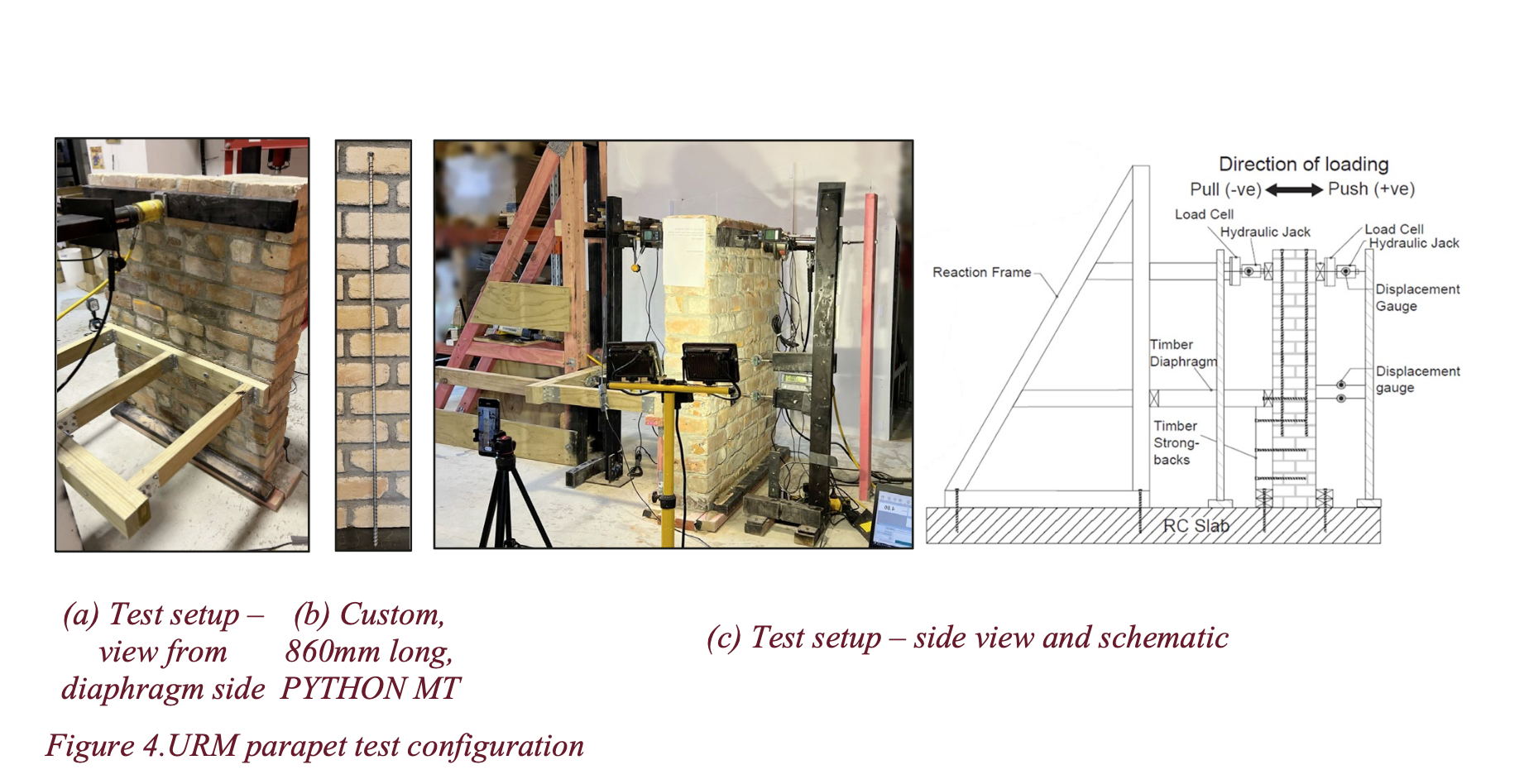
Constructed 11 full-scale URM parapet specimens using reclaimed heritage bricks and simulated lime mortar.
Specimens ranged 16" - 40" (400 - 1010 mm) in height, single and double wythe.
Variables included anchor spacing, embedment depth, mortar strength, and presence of timber strongbacks below the diaphragm.
Testing included monotonic and quasi-static cyclic out-of-plane loading to as-built and retrofitted parapets.
Retrofitted parapets contained 5/16" (8 mm) vertical mechanical screw anchors 34" - 51" (860–1300 mm) long installed vertically down through the parapet and embedded below the diaphragm using standard hand power tools.
Selected specimens also included internal timber strongbacks to assess wall–parapet interaction effects.
FINDINGS
The addition of vertical screw anchors increased out-of-plane capacity by ~9× from the cracked as-built rocking capacity.
Where anchors were embedded into concrete below (bond beam condition), improvements reached up to 20×.
Addition of timber strongbacks below the diaphragm increased capacity by an average of 13.6×, highlighting the importance of wall restraint.
Retrofitted specimens exhibited stable cyclic behaviour with substantially improved ductility.
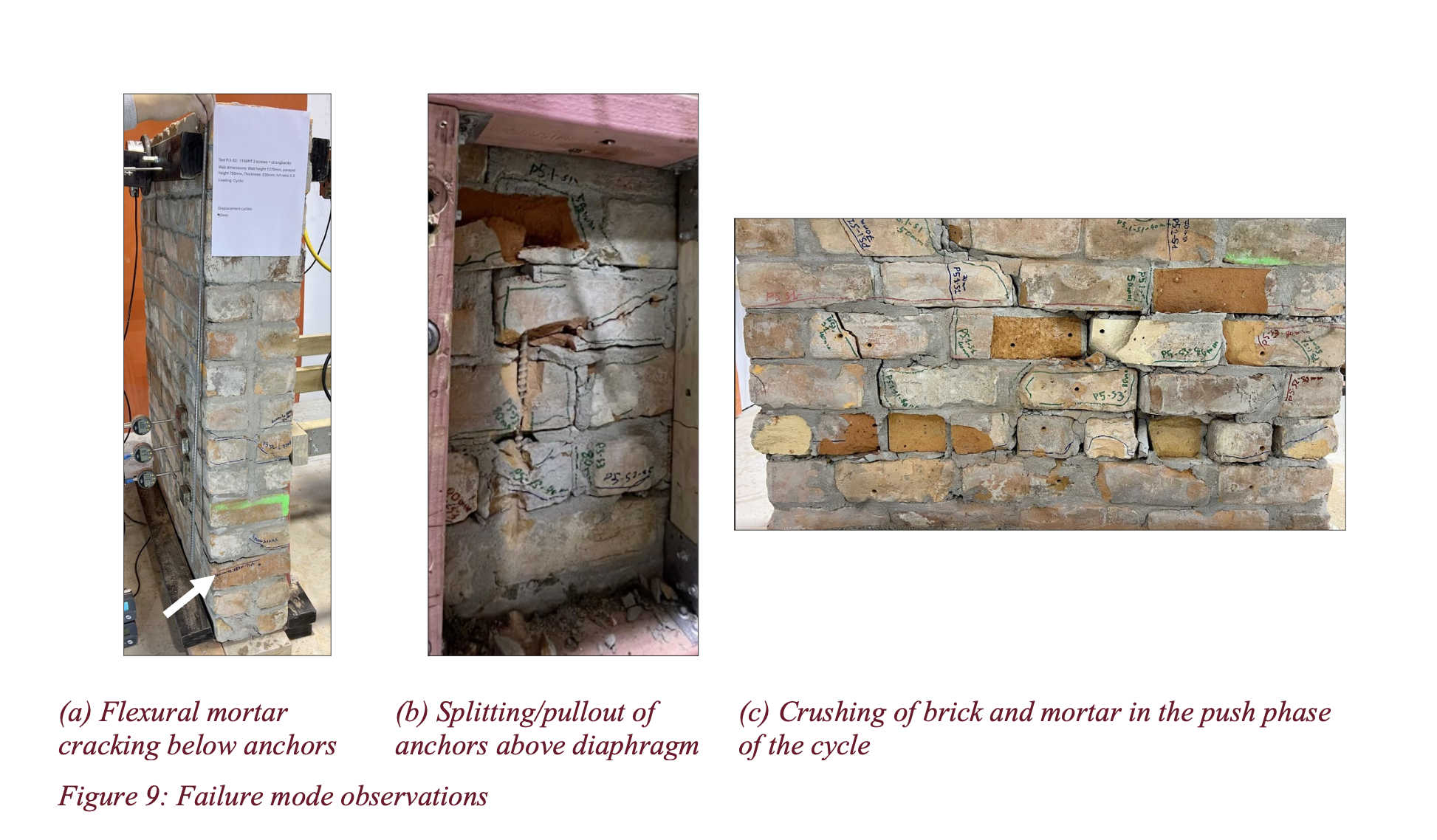
Governing failure modes included flexural mortar cracking, anchor yielding, masonry crushing, and anchor pullout below the diaphragm.